The Man on the Mat
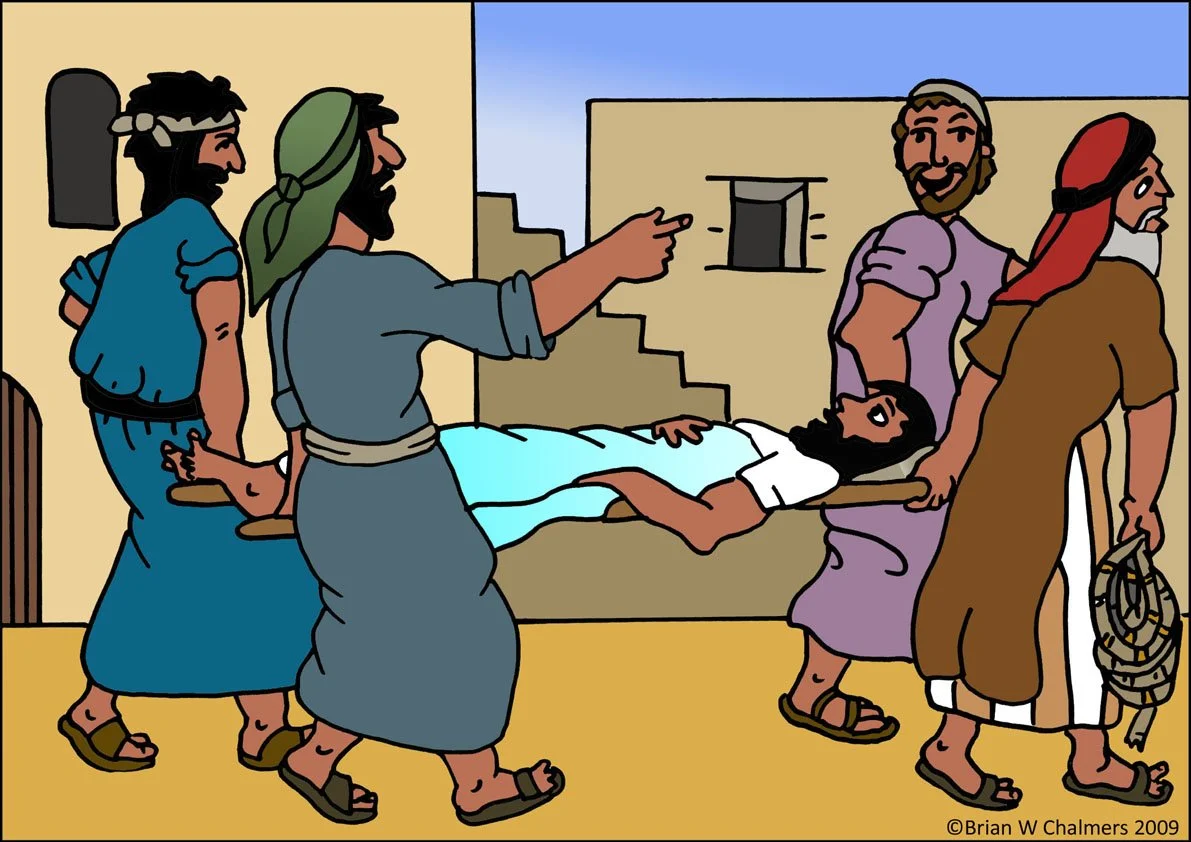
The man on the mat
There’s a story in the Bible that many kids are familiar with - many have even played it out in skits: the story of the paralysed man whose friends get him to Jesus by creating a hole in the roof of the house where Jesus was. As the story goes, the man is lowered down; Jesus forgives his sins; the Pharisees are scandalised by that; and Jesus then asks which is easier, to forgive sins or to tell someone to walk? After which, he commands the man to pick up his mat and walk, and he does.
That’s a familiar story. The man is unnamed and he never speaks, and he appears entirely a passive recipient of his own healing, first spiritual and then physical.
But is he?
As I read this story recently, I noticed that the man actually was actively obedient to Jesus: told to pick up his mat, he did so. Having been healed, he could have just walked away without taking this unwieldy reminder of his disability with him, couldn’t he? So there was an active obedience there.
This makes me wonder if the man was really as passive as I had pictured him in my mind before. Whose idea was it to have him taken to Jesus? Was it his friends’ - and thinking of friends, he clearly remained a friend (rather than an object of charity) to this group: a member of this group. Friendship implies giving and taking, an equality. So, I think it is entirely possible that he was active in this decision to take him to Jesus. Did he ask them to take him? Did he even put pressure on them, implore them to help him in this way? We cannot know whether it was he who had heard about Jesus and asked his friends to take him, or one of the group did, or perhaps they all did.
There are many stories in the Bible that involve unnamed people whose stories we cannot know, and we only see a glimpse of their lives, usually at the time those lives are forever changed through meeting Jesus. But there are back stories, years, decades of life and there are personalities, thoughts, identities.
And yes it’s fun to explore these, to imagine possibilities, I found this particular meditation on the man who was lowered through the roof really important. Because before Jesus, there are no passive participants. He doesn’t just ‘bestow’ salvation on people who have no interest, no part in it. He comes to the hungry, to those who need him, to those who want him; but he doesn’t throw himself at those who sit back and remain passive. There has to be an active wish - and we know him well enough to know that even at the first inkling of such a wish, he is there. To forgive and to heal, as he did for the man.