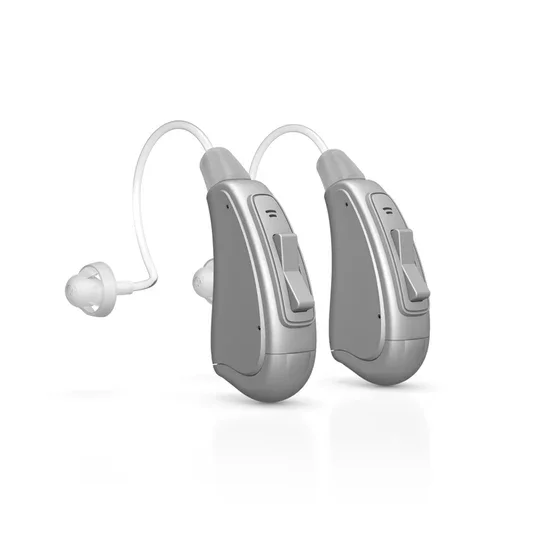
Hearing Aid Miniaturisation and Rocket Technology
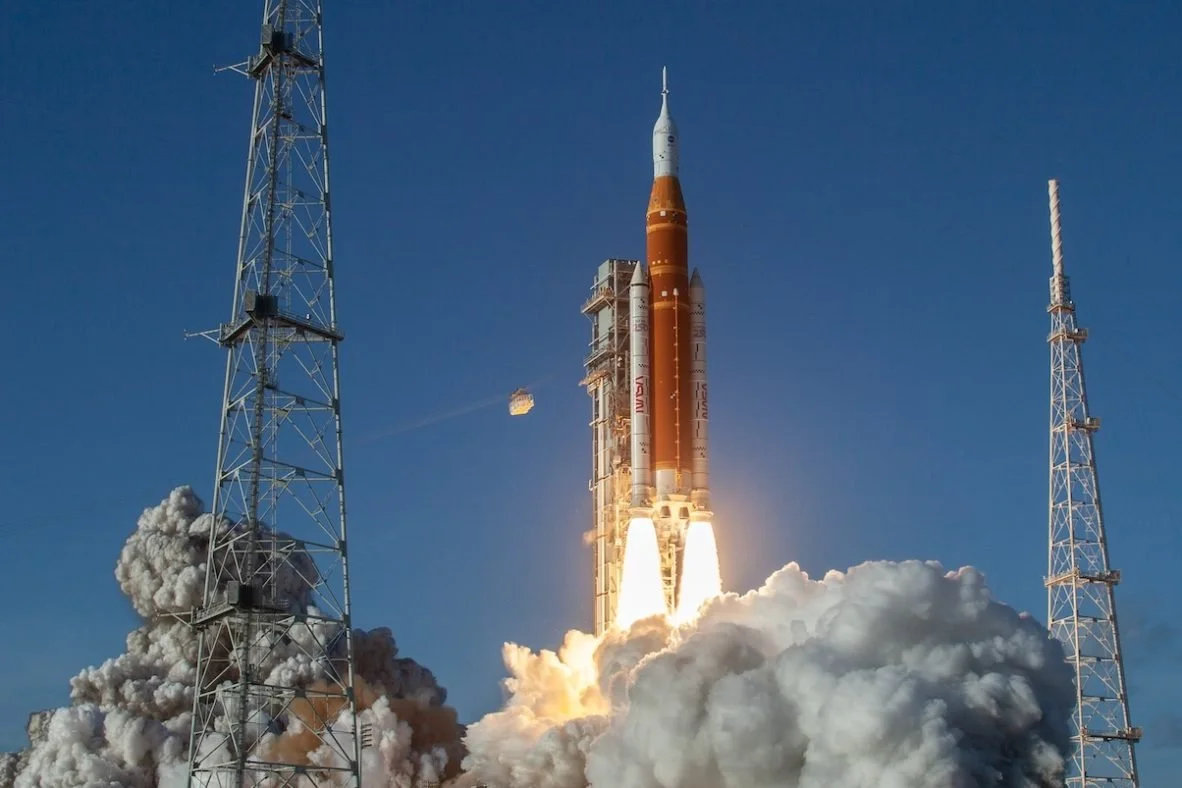
Artemis II
Last month on television, I watched the Artemis II rocket lift off from its launchpad in Florida on its journey around the moon with awe and fascination.
I recalled being told as a child that hearing aid miniaturisation relied on pioneering developments in rocket technology at that time. To take one example, NASA used light silver-zinc batteries to power the Apollo moon missions (1968-72) and now silver-zinc rechargeable batteries have been developed for use in hearing aids instead of disposable zinc-air batteries.
As I was born profoundly deaf (with residual hearing in the lower frequencies), I was fitted with a body-worn transistor hearing aid at the age of 18 months, progressing to a smaller analogue behind-the-ear aid at the age of 12. Now I have a fully digital BTE customised to my hearing loss, which would have been every audiologist’s dream in the 1970’s.
Had I been born twenty or thirty years earlier, I would probably have been fitted with a bulky “two-piece” hearing aid. This was based on vacuum tube technology, and consisted of a processor leading to an earpiece and two heavy batteries (one high-voltage and one low-voltage) often carried separately in waistcoat pockets.
Integrated circuits and incredibly powerful microprocessors reduced the size of hearing aids still further. Now Bluetooth and AI-enabled hearing aids are a marvel of modern technology, able to separate speech from background noise.
Thanks to space exploration, the commercial spin-offs have been truly beneficial, not least in hearing aid and cochlear implant miniaturisation. This has helped thousands of deaf people and hard of hearing people to utilise their remaining hearing more discreetly and effectively.